In Part 1, we explored how Loyalty-Embedded Payments transform the checkout experience. But to understand why this matters, we need to look at why existing models fall short.
For years, loyalty programmes in travel, hospitality, retail, and telecom have relied on a familiar two-part model to engage, reward, and monetise their members across partners.
It worked.
But it was never designed to scale.
The Two Legacy Pillars of Loyalty
1. Co-Branded Credit Cards
Co-branded cards have long been the gold standard of loyalty engagement and monetisation — and for good reason.
They succeed because they embed rewards directly into payment behaviour:
- Members earn valuable rewards simply by paying
- Engagement and spend increase significantly
- Brands unlock powerful monetisation through issuer partnerships
- Issuers acquire high-value cardholders in a competitive market
But this model has a structural limitation.
While rewards are funded through interchange fees paid by merchants, those same merchants play no active role in the loyalty ecosystem they are effectively financing.
More critically, co-branded cards are inherently exclusive:
- Credit checks
- Fees
- Competition from other cards
As a result, only 5–20% of members typically become cardholders.
High value — but limited reach.
2. Card-Linked Offers (CLO)
Card-linked offers were designed to solve the scale problem.
They allow members to link existing payment cards and earn rewards across a broad merchant network.
This expands participation dramatically — but introduces new challenges.
CLOs are:
- Passive — disconnected from the checkout experience
- Delayed — rewards arrive later
- Opaque — difficult for merchants to measure impact
Common issues include:
- Limited ability to measure true sales uplift
- Inconsistent reward tracking and attribution
- Redemption via indirect mechanisms (e.g. statement credits or gift cards)
Broad reach — but limited control and engagement.
The Structural Trade-Off
Legacy loyalty models force a fundamental compromise:
- Depth: High engagement and value, but limited to a small audience
- Scale: Broad participation, but low impact and weak monetisation
Loyalty programmes have been forced to choose between: meaningful engagement or mass adoption — never both.
The Question That Changes Everything
What if every member could become a cardholder — without credit checks, fees or friction?
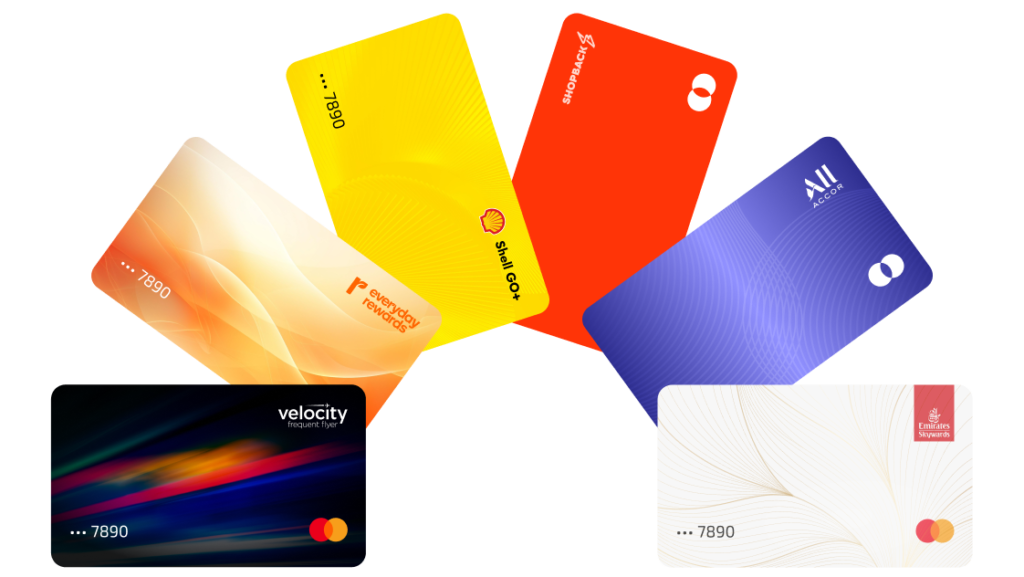
Enter the Co-Branded Reward Card
A new model is emerging: the co-branded reward card.
Unlike traditional credit cards, it:
- Converts all members into identifiable cardholders
- Requires no credit checks or barriers to entry
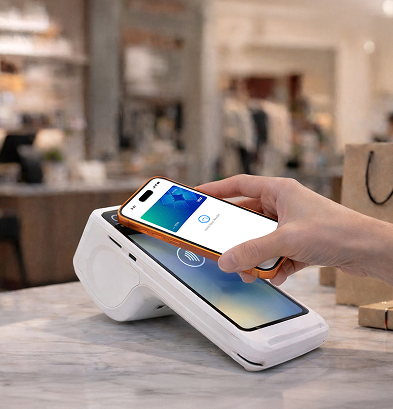
- Works instantly at checkout
- Requries no POS integrations or operational change
- Embeds loyalty directly into the payment experience
This is not an incremental improvement.
It is a structural reset — removing the trade-off between scale and depth.
Why This Changes Everything
For the first time, loyalty programmes can:
- Reach 100% of their member base
- Deliver real-time engagement at the point of payment
- Provide measurable value to merchants
- Maintain direct control over incentives and data
In other words, loyalty becomes: scalable, measurable, and embedded.
What Comes Next
Issuing a payment card to millions of members raises an obvious question:
How do you do it — efficiently, compliantly, and at scale?
In the next article, we explore exactly how that challenge is being solved — and what it means for brands, merchants, and issuers.