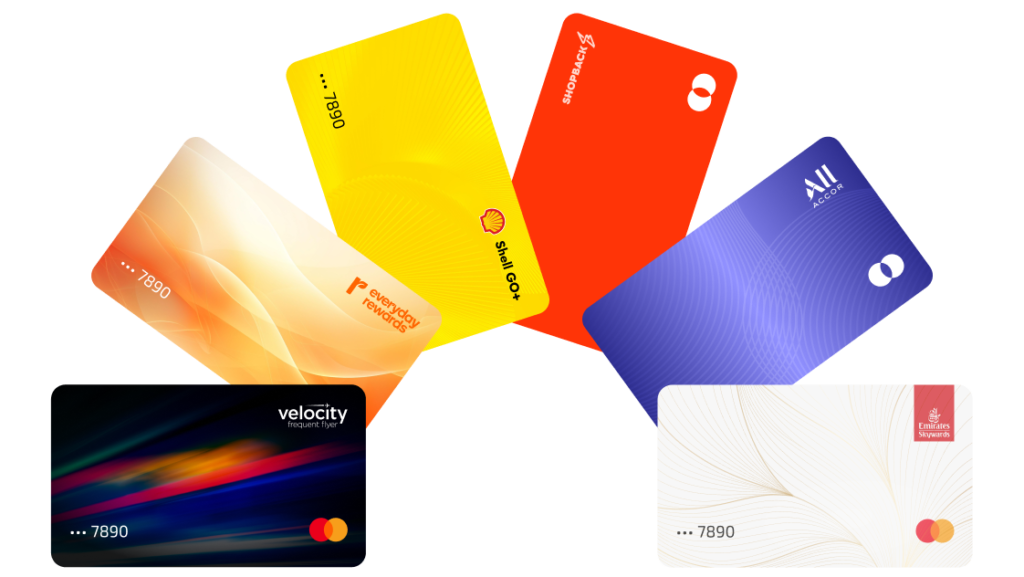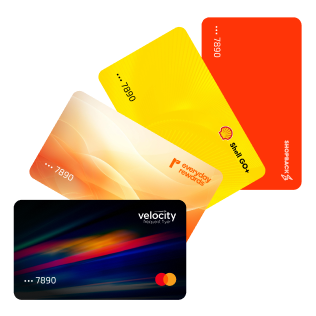
In Part 3, we explored how Flexible Credentials make it possible to issue a payment-enabled loyalty card to every member — at scale.
But an important question follows:
If Flexible Credentials already exist, why isn’t loyalty already transformed?
The Rise of Flexible Credentials
As payments and loyalty continue to converge, Flexible Credentials have emerged as a powerful innovation — promising simplicity, interoperability, and scale.
Today, both major card schemes offer their own versions:
- Visa Flexible Credential
- Mastercard One Credential
These are meaningful advancements — and an important step forward for the payments ecosystem.
But they were designed first and foremost for banking use cases, not for loyalty ecosystems.
That distinction is subtle — but critical.
What Scheme-Native Flexible Credentials Are Built to Do
At their core, scheme-native Flexible Credentials are designed to help issuers manage complexity.
They allow banks to bundle multiple funding sources — credit, debit, instalments, pay-later — behind a single credential.
This enables issuers to:
- Let cardholders choose or automate how they pay
- Drive top-of-wallet behaviour
- Cross-sell financial products without issuing new cards
- Reduce operational complexity using existing scheme infrastructure
They work extremely well — for banks.
Why Loyalty Has Fundamentally Different Needs
Loyalty programmes don’t operate like banks.
They are not issuer-led.
They are not driven by interchange economics.
They are ecosystems — connecting brands, merchants, and consumers.
That difference changes everything.
1. Consumer Recognition — Not Cardholder Recognition
Banks need to know which account is used.
Loyalty needs to know who the customer is — regardless of how they pay.
Without persistent consumer identity across payment methods, loyalty cannot scale inclusively.
2. Issuer-Agnostic by Design
Loyalty programmes cannot require users to bank with a specific issuer.
They must work seamlessly with:
- Any credit card
- Any debit card
- Any existing financial relationship
3. Scheme-Agnostic Interoperability
Consumers don’t all use the same payment network.
Loyalty must work across:
- Global card schemes
- Domestic payment schemes
- Digital wallets
- Alternative payment methods
Anything less creates fragmentation.
4. Native Reward and Redemption Logic
Loyalty is not about issuer points.
It requires seamless use of:
- Brand currencies
- Partner currencies
- Real-time earn-and-burn mechanics
Without relying on:
- Statement credits
- Points conversions
- Gift card workarounds
These are banking abstractions — not true loyalty experiences.
5. Partner-Funded, Real-Time Economics
Scheme-native credentials are built on interchange-driven economics.
Loyalty operates differently:
- Rewards are partner-funded
- Attribution must be real-time
- Settlement must be transparent and measurable
This is not a payments problem.
It’s a multi-party value exchange problem.
The Core Misalignment
At a structural level:
- Payment networks optimise for transactions
- Loyalty programmes optimise for behaviour and engagement
Scheme-Native Flexible Credentials solve:
→ how a payment is made
Loyalty needs to solve:
→ why it’s made — and what value is created when it happens
Loyalty Isn’t a Feature — It’s an Ecosystem
Loyalty connects:
- Brands
- Merchants
- Consumers
- Partners
In real time.
It requires:
- Instant recognition at checkout
- Interoperability across payment methods
- Flexible, cross-partner earn-and-burn
These capabilities become even more critical as commerce evolves toward:
- Subscriptions
- Embedded finance
- Agent-driven and automated transactions
What’s Needed Instead
If loyalty has fundamentally different requirements, it needs a loyalty-native Flexible Credential — built specifically for:
- Identity (who the customer is)
- Interoperability (how they pay)
- Orchestration (how value is created and distributed)
Scheme-native solutions are a powerful foundation.
But they are not the full answer.
What Comes Next
So how do you design a Flexible Credential system built specifically for loyalty — one that supports real-time rewards, partner ecosystems, and global scale?
In the next article, we’ll explore how BLUE OCEAN LOYALTY addresses these challenges — and why the future of loyalty depends on it.